Choosing between a bayfront or oceanfront home in Newport Beach can feel like picking between two iconic lifestyles. Both are rare, both are spectacular, and both come with unique rules, risks, and rewards. You want beauty and ease, but you also want clarity on permits, insurance, privacy, and long-term value. This guide breaks down the real differences so you can move forward with confidence. Let’s dive in.
Bayfront vs. oceanfront at a glance
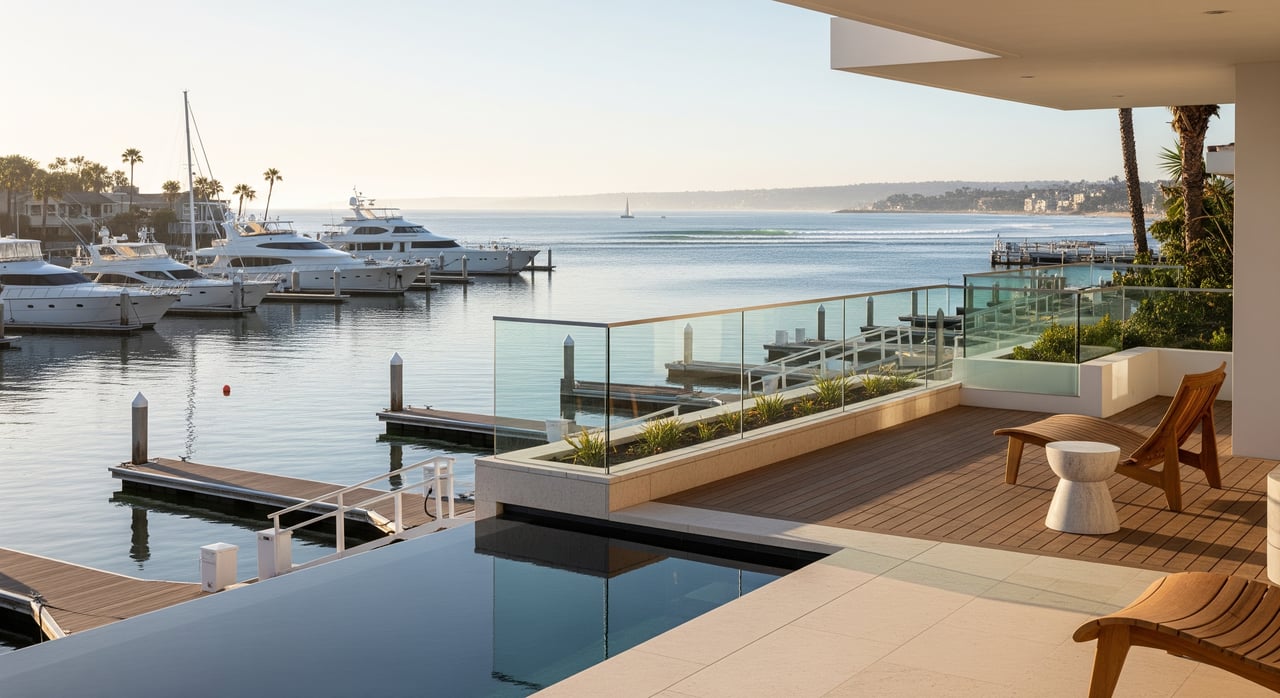
- Bayfront means direct frontage on Newport Bay, the harbor, or interior channels. You’ll see this on parts of Balboa Peninsula’s bay side, Lido Isle, Harbor Island, and sections of Balboa Island. Expect calmer waters, possible private docks, and lights-on-the-harbor views.
- Oceanfront faces the open Pacific along beaches and bluffs. Examples include the ocean side of the Balboa Peninsula and segments of Corona del Mar and Newport Coast. Expect beach access or bluff-top vistas, surf exposure, and a front-row seat to coastal recreation.
Why it matters: The bay is a sheltered waterway with harbor infrastructure and private docks. The oceanfront is shaped by Pacific swell, public beach access, and coastal protections. Those differences drive lifestyle, permitting, maintenance, insurance, and resale dynamics.
Lifestyle differences you will feel
Water access and recreation
- Bayfront: Easy boating, sailing, paddleboarding, and kayaking right out your door. Many bayfront properties include or may qualify for private docks or lifts, subject to city and state approvals. Calm water is friendlier for small craft.
- Oceanfront: Direct access to sand, surf, and tidepools. Great for surfing, beach walks, and open-water activities, but not for docking a boat out front.
Crowds and everyday activity
- Bayfront: Activity centers on boating and marinas. You may hear boat engines and harbor life, but foot traffic is generally lower than beachfront boardwalks.
- Oceanfront: Public beaches and piers draw steady visitors, especially in peak seasons. Expect lifeguards, beachgoers, walkers, parking demand, and periodic noise.
Privacy and public access
- Oceanfront: Sandy beach seaward of the mean high tide line is generally public. Access ways and boardwalks are common, so public interface is part of the experience.
- Bayfront: Seawalls and private docks can offer separation from the public, though some areas include public harbor walkways and easements. Always verify parcel-specific access rights.
Views and orientation
- Oceanfront: Unobstructed horizon views and dramatic sunsets are the signature.
- Bayfront: Harbor activity, boats, and twinkling lights form the backdrop. Sunrise and sunset angles depend on home orientation.
Neighborhood form and feel
- Bayfront: Narrower lots that extend to seawalls are common. Multi-level homes often meet the waterline, with docks and lifts used as extensions of daily life.
- Oceanfront: Mix of beachfront homes and bluff-top estates. Setbacks, bluff stability, and public access shape yard space and design options.
Permits and ownership essentials
Coastal permits and local review
Most significant projects in the coastal zone are subject to the California Coastal Act. Depending on scope and location, you may need a Coastal Development Permit and city approvals. Start early with the city and state so your design and timeline align with policy.
- Learn more about the permitting framework at the California Coastal Commission.
- Find city-level processes and contacts through the City of Newport Beach.
Docks, moorings, and overwater structures
- Bayfront: Private docks and boat lifts are often possible on qualifying parcels, but approvals are specific. Eligibility depends on lot configuration, tidelands, easements, and environmental factors, with reviews by city harbor staff and, when applicable, state and federal agencies.
- Oceanfront: Private docks along sandy beaches are generally not feasible due to surf, public access, and regulatory constraints.
Work with the City’s Harbor and Planning departments to confirm dock rights and standards early in the process via the City of Newport Beach.
Setbacks, seawalls, and shoreline armoring
- Oceanfront: Seawalls and revetments face intense review because of erosion, sand transport, and public access impacts. Expect higher scrutiny for new or modified shoreline protection.
- Bayfront: Seawalls are common in the harbor environment, yet still require structural and environmental review.
Flood zones and building codes
- Oceanfront parcels are more likely to be in FEMA V (velocity wave) or other high-risk coastal flood zones. That can trigger elevated foundations, stricter design standards, and flood insurance requirements for financed purchases.
- Bayfront homes can also sit in flood zones tied to tides and storm surge. Utility placement, elevation, and foundation design are key planning items.
Check parcel status with the FEMA Flood Insurance Rate Maps and secure elevation certificates where available.
Short-term rental and local rules
Newport Beach has specific licensing and location rules for short-term rentals. HOA rules, CC&Rs, and coastal zoning also apply. Confirm permitted uses and limits with the city and your association before assuming rental income. Start with the City of Newport Beach and your HOA documents.
Risk, maintenance, and insurance
Coastal hazards to plan for
- Oceanfront: Higher exposure to wave energy, storm surge, coastal erosion, and wind-driven salt spray. Bluff stability is a factor for bluff-top homes.
- Bayfront: Tidal flooding, boat wake impacts, and localized erosion. Water quality can vary with conditions in enclosed waters.
For ocean safety context, review National Weather Service surf and rip current safety.
Sea level rise and long-term outlook
Sea level rise is a planning consideration for low-lying areas of the peninsula and harbor edges. Newport Beach participates in regional adaptation planning, and buyers should review scenario-based impacts.
Explore potential exposure with the NOAA Sea Level Rise Viewer, and consult city planning resources for local assessments and policies.
Insurance and cost of ownership
- Flood insurance: Oceanfront homes in VE zones often carry higher flood premiums and stricter mitigation requirements. Bayfront homes may also require coverage, depending on elevation and FEMA zone.
- Maintenance: Both settings face salt corrosion on finishes, metalwork, HVAC, and openings. Oceanfront properties typically see more wind-driven salt intrusion. Harbor-side homes add dock and seawall maintenance to the mix.
- Carrier availability: Coastal insurability can change as risk models evolve. Obtain quotes early and discuss mitigation measures during due diligence.
Market and value drivers
Scarcity and premium
- Oceanfront with sandy beach access or bluff-top, unobstructed views is inherently scarce, which supports premium pricing.
- Bayfront with a private dock or direct water usability is equally rare and prized by boating-focused buyers.
Usable water amenity vs. view premium
- Bayfront value often includes a functional amenity: your dock. For buyers with boats, slip size and dock eligibility can meaningfully influence price.
- Oceanfront value leans on beach access, sightlines, and the surf lifestyle. Interruptions to views or access points can affect pricing.
Lot form and development potential
- Bayfront: Lot depth and configuration influence outdoor living space and dock potential.
- Oceanfront: Bluff stability, setbacks, and access considerations shape footprint, height, and yard usability.
Neighborhood-level context
Proximity to piers, marinas, restaurants, and services plays a role for both sides of the water. Gated enclaves and HOA-managed islands can change privacy and services, which some buyers prize.
Buyer and seller checklist
Use this practical list to streamline due diligence:
- Pull parcel-specific FEMA maps and request elevation certificates: FEMA Flood Insurance Rate Maps.
- Check title for easements, deeded water rights, and any public access requirements.
- Verify permitting history with the City of Newport Beach, including Planning and Harbor departments.
- Review any Coastal Development Permits or enforcement records at the California Coastal Commission.
- Get early quotes for property, flood, and wind coverage from multiple carriers.
- Order a marine or coastal structural inspection focused on seawalls, docks, foundations, or bluffs, as applicable.
- Visit at different times to understand parking, traffic, and seasonal crowd patterns.
- For sellers: assemble permits and documentation for docks, seawalls, and repairs. Disclose flood zones, prior flooding, and any coastal or harbor restrictions.
Which setting fits your goals
Choose based on how you will actually live in the home.
- If daily boating and harbor life are central, bayfront living puts your boat and paddleboard at your doorstep.
- If you want sand underfoot, surf checks from the patio, and horizon sunsets, oceanfront delivers the classic beach experience.
- If you prioritize privacy and lower foot traffic, select specific streets or enclaves with fewer public access points and verify any easements during escrow.
- If your plan includes renovations or a new build, start design conversations with the city and state early to align on setbacks, dock rules, and shoreline protection.
When the property is significant, the details matter. The right guidance turns complexity into confidence.
Ready to compare specific streets, parcels, and permitting histories or to position your property for a discreet sale? Connect with Steve High & Evan Corkett to start a confidential consultation tailored to your goals.
FAQs
What is the core difference between bayfront and oceanfront in Newport Beach
- Bayfront fronts the sheltered harbor with potential dock access, while oceanfront faces the open Pacific with beach or bluff exposure and public shoreline access.
Can I build a private dock on a Newport Beach bayfront property
- Possibly, if the parcel qualifies and permits are secured from city harbor officials and, when applicable, state or federal agencies; verify eligibility early with the city.
How do flood zones and insurance differ for oceanfront vs bayfront homes
- Oceanfront homes are more often in high-risk coastal zones that require elevated construction and higher flood premiums; bayfront homes may also require coverage based on FEMA mapping and elevation.
Will there be public access in front of an oceanfront home
- Yes, sandy areas seaward of the mean high tide line are generally public, and access points or boardwalks are common near many beachfront properties.
What maintenance should I expect in each setting
- Both settings demand frequent care for salt corrosion; oceanfront homes typically face more wind-driven salt, while bayfront homes add seawall and dock maintenance.
How do short-term rental rules affect beach and bay homes in Newport Beach
- Newport Beach requires specific licensing and limits short-term rentals in certain areas; confirm municipal code, HOA, and coastal zoning before assuming rental income.