If you are weighing a home on Collins Island, you are likely focused on three things: how scarce the inventory is, how private daily life feels, and how practical the harbor and ocean access will be for your boating. You want clarity before you act. This guide gives you a straightforward view of inventory dynamics, privacy and access, plus the key checks to complete during due diligence. Let’s dive in.
Collins Island context
Collins Island sits within Newport Harbor’s network of residential islands, known for waterfront living and private docks in ZIP 92662. Parcel boundaries, zoning, and municipal services are administered by local agencies, so you should verify specifics through the City of Newport Beach and the Orange County Assessor.
While each island in Newport Harbor has its own character, Collins Island stands out for its small scale and bayfront setting. Because of that small footprint, the supply of homes is very limited and trades are infrequent compared with inland neighborhoods. Exact counts and turnover should be confirmed with current MLS data and county records before you make any timing or pricing decisions.
Ultra-limited inventory
Inventory on Collins Island is ultra-tight because there are a finite number of parcels and long ownership tenures. Low turnover can limit the number of recent comparable sales, which affects pricing and appraisal strategies.
To gauge inventory in real time, focus on:
- Current active, pending, and off-market opportunities in MLS.
- Parcel counts and ownership from the Orange County Assessor.
- Sale cadence over several years through MLS and county recorded deeds.
In practice, you should be prepared for a longer search window and the possibility of private offerings. This is common in premium harbor micro-neighborhoods where privacy and discretion are priorities.
What lots and homes offer
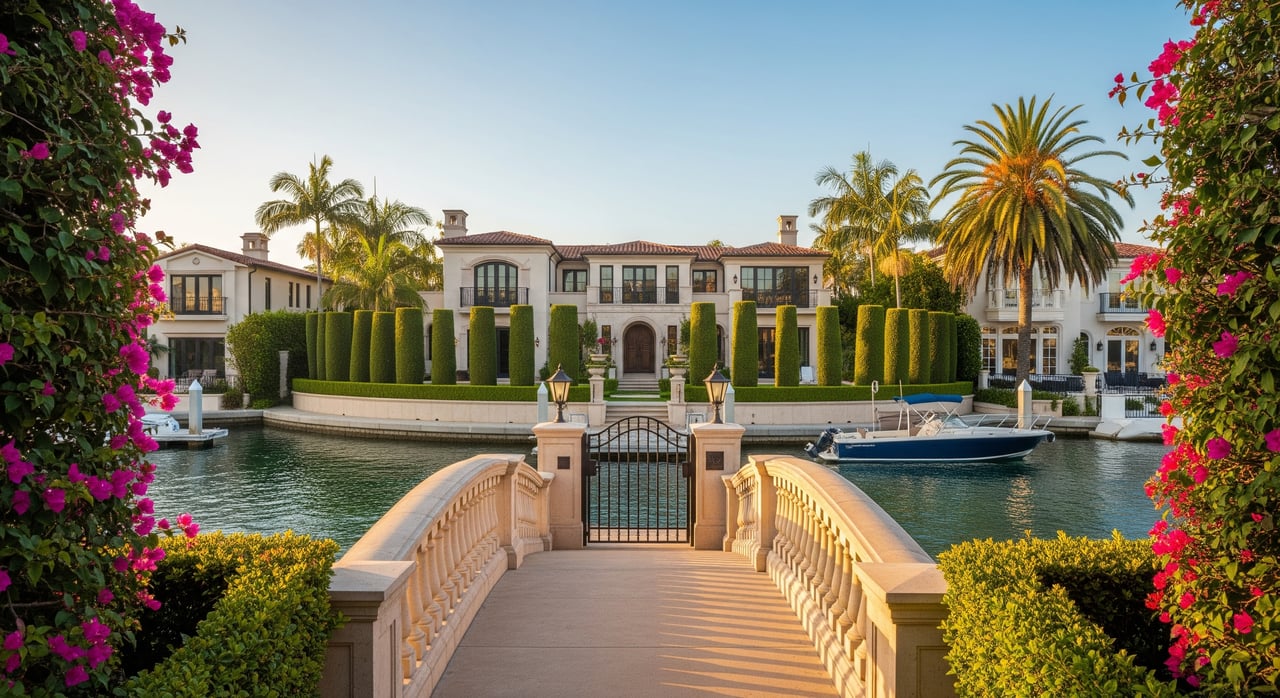
Most Collins Island lots are compact and oriented to maximize water frontage. Expect a private bulkhead or seawall and a dock directly behind the home in many cases, with slip size and layout varying by parcel.
High-end homes in this setting commonly feature:
- Multi-level floor plans, often with elevator access.
- Four or more bedrooms, multiple living areas, and high-end kitchens.
- Garages sized for several vehicles, with property-specific parking considerations to confirm.
- Outdoor living that blends terraces, rooftop or view decks, spa or pool, and direct dock access.
- Structural marine elements like concrete bulkheads, pilings, and private steps or gangways to the dock.
Always verify floor plans, dock dimensions, and slip capacity on a property-by-property basis. Dock size, depth, and orientation can materially influence value and usability.
Land access, privacy, and security
On small residential islands in Newport Harbor, land access is typically limited to a single road or bridge, which naturally reduces traffic and enhances privacy. Pedestrian and guest access often follows the same route.
For Collins Island, confirm whether the access road is privately owned or publicly maintained, and whether any gates, keypads, or on-site staffing are in place. Those details live in association documents, city records, and site-specific disclosures. Review HOA rules, guest policies, exterior lighting standards, and any utility or maintenance easements that allow service entry.
Water access and dock specifics
Collins Island homes generally enjoy direct access to Newport Harbor with a short run to the harbor entrance and the open ocean. Local navigation rules, channel depths, tidal conditions, and vessel draft or length limits can affect which boats can comfortably berth and exit to sea.
Any dock, bulkhead, or significant shoreline work usually requires city permits and, in some cases, review by the California Coastal Commission. Maintenance and repairs for seawalls and docks are often the owner’s responsibility, so confirm the current condition, permit history, and any required approvals with the City of Newport Beach and the harbor authorities.
Regulatory and risk essentials
Buying on the harbor means understanding coastal, structural, and insurance factors before you commit. Build these checks into your process:
- Flood zones and insurance: Much of Newport Harbor is mapped within FEMA flood zones. Confirm a property’s flood designation through the FEMA Flood Map Service Center and obtain flood insurance quotes early if you use financing.
- Sea-level rise planning: Review long-range exposure using the NOAA Sea Level Rise Viewer and statewide guidance from the California Ocean Protection Council. Also check city resilience materials and any local mitigation strategies through the City of Newport Beach.
- Permits and shoreline rules: Dock, bulkhead, and major additions are governed by local permits and, in some cases, coastal oversight by the California Coastal Commission. Confirm existing approvals and any open compliance items.
- Title and easements: Order a current title report and ALTA survey to identify public trust or shoreline easements, reciprocal access agreements, or maintenance obligations.
- Insurance underwriting: Coastal properties can face higher premiums or limited coverage for wind and water. For complex exposures and large rebuild values, consider excess flood and umbrella liability in addition to a primary policy.
Market drivers and valuation
With low turnover, appraisals may rely on older comparables that need adjustments for view corridors, dock size, slip depth, and recent improvements. Private docks and protected boat access can command a premium, as can enhanced privacy from controlled land entry.
Other price influencers include seawall condition, proximity to the harbor entrance, orientation for sun and views, and any limitations on parking or guest access. Tax considerations follow Orange County and California rules, so coordinate with your tax advisor for basis, transfer, and potential 1031 or legacy planning.
Buyer due diligence checklist
Use this condensed checklist to streamline your evaluation and protect your position:
Pre-offer
- Confirm legal description, parcel lines, and lot dimensions via Assessor and recorded plats.
- Review current MLS activity and recent comparable sales for trend direction and velocity.
- Check city or HOA rules on short-term rentals if relevant to your use.
Under contract
- Order full title report and ALTA survey tied to bulkhead and mean high tide line.
- Commission general home, specialty marine, and dock inspections that cover pilings, bulkhead, and slip specs.
- Review HOA CC&Rs, bylaws, budgets, reserve studies, and any special assessments if applicable.
- Pull permit history for docks, seawalls, and major renovations; resolve any unpermitted work.
- Obtain flood and specialty insurance quotes, including willingness to underwrite.
- Evaluate sea-level rise exposure and potential long-term capital needs for armoring or raising structures.
- Confirm utility locations, capacities, and any access easements.
- Verify dock assignments, slip size, depth, and any dredging obligations.
Closing and post-closing
- Budget for immediate seawall or dock maintenance discovered in inspections.
- Confirm transfer of harbor and dock permits and any coastal approvals.
- Set up guest access protocols and security systems that align with association and city rules.
The bottom line
If you value privacy, direct water access, and the ease of harbor-to-ocean boating, Collins Island deserves a close look. Inventory is scarce, so preparation and discretion matter. A strong outcome depends on disciplined due diligence, clear understanding of permits and coastal rules, and early planning for flood, insurance, and long-term shoreline needs.
For a confidential strategy, curated inventory, and waterfront-specific counsel, connect with Steve High & Evan Corkett. Our team pairs deep local knowledge with discreet, high-touch representation tailored to your goals.
FAQs
How many homes are on Collins Island and how often do they sell?
- Inventory is finite and turnover is infrequent; verify exact parcel counts and recent sales through MLS data and the Orange County Assessor before planning timing or pricing.
Are Collins Island docks private and suitable for large yachts?
- Dock size, slip depth, and approach vary by parcel; confirm dock specs, channel depths, and any dredging factors with city harbor authorities and permit records before committing to a vessel size.
Is Collins Island gated and how is land access managed?
- Access infrastructure varies by island and association; verify road ownership, any gates or keypads, and guest policies through HOA CC&Rs and City of Newport Beach records.
What flood and sea-level risks should I plan for on Collins Island?
- Many harbor properties lie within FEMA flood zones; check parcel designations via the FEMA Flood Map Service Center and review sea-level projections with the NOAA Sea Level Rise Viewer before obtaining insurance quotes.
Who maintains seawalls, docks, and related marine infrastructure?
- Maintenance obligations are often set in title documents or association rules; confirm responsibilities and any recorded easements during title review and by checking city permit history.