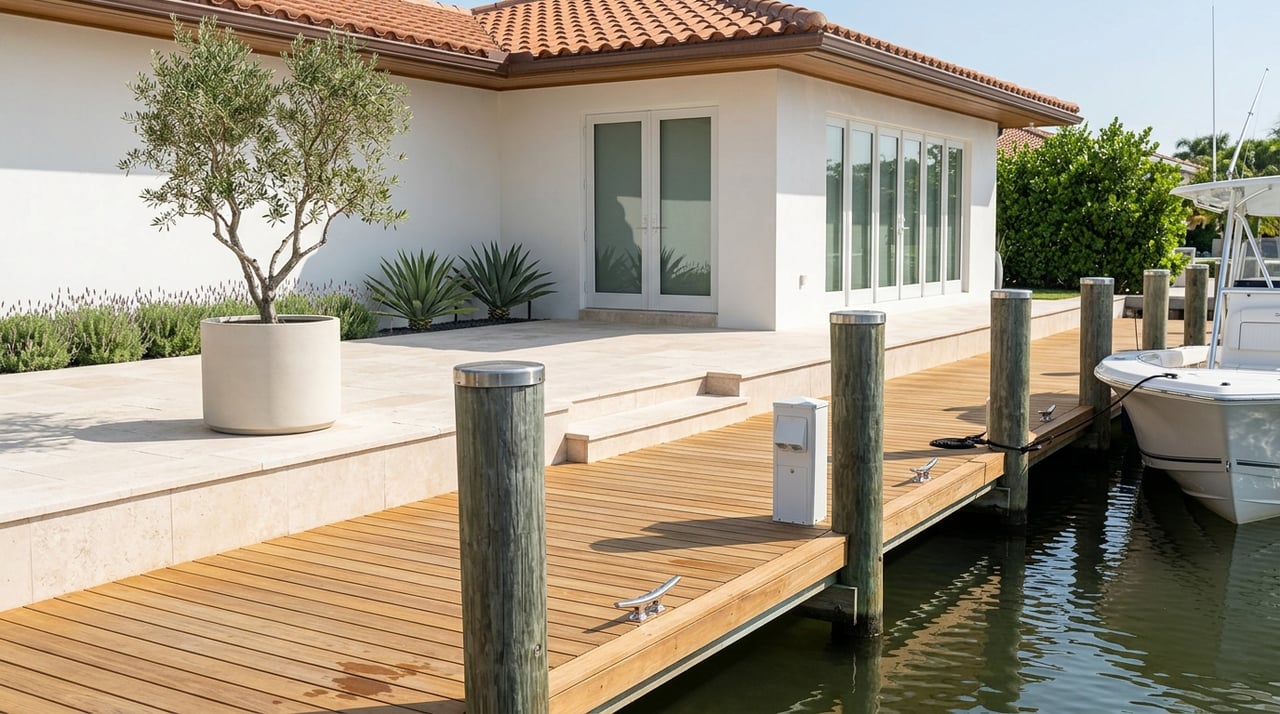
If you are considering Collins Island, you are not shopping a typical Newport Beach address. You are evaluating one of the smallest residential enclaves in Newport Harbor, where each property can carry its own mix of dock utility, privacy, access, and long-term upkeep. A smart purchase here starts with the right questions, and this guide will help you frame them clearly. Let’s dive in.
Why Collins Island Requires a Different Approach
Collins Island is a strictly residential harbor island within Newport Beach, and city materials identify just eight single-family residences on the island. That scale matters. In a market this small, broad neighborhood averages often tell you less than the specific characteristics of the lot and waterfront improvements you are buying.
The island is accessed only by the Collins Island Bridge via Park Avenue. CEQA materials for the bridge replacement project note that the current bridge was built in 1953 and is considered functionally obsolete, with project planning that includes seawall improvements and future sea-level-rise accommodations. For you as a buyer, that means infrastructure should be part of your underwriting from day one.
Focus on the Property, Not the Zip Code
In many luxury markets, buyers can lean on neighborhood-level comparisons. On Collins Island, that approach can miss the point. With only eight homes, value is more likely to turn on factors like view orientation, dock function, privacy, and the condition of waterfront improvements.
That is especially important in Newport Harbor, where the residential setting and marine use are closely connected. A home here is not just a structure on land. It may also be an operating waterfront asset that depends on permits, access, and physical design.
Dock Rights and Permits Come First
For many Collins Island buyers, the dock is the first major diligence item. The City of Newport Beach requires pier-permit transfers to be submitted at close of escrow with buyer and seller information and signatures, and the pier is inspected before transfer. The city also states that piers and docks must have an approved backflow prevention device.
If you plan to keep a vessel at the property, it is important to confirm that the existing improvements are legal, current, and suitable for your intended use. A beautiful bayfront setting does not automatically mean the dock setup matches your boating needs.
Key dock questions to ask
- Is the pier permit current and transferable?
- Has the dock been inspected recently, and are any corrections expected?
- Does the slip or dock legally accommodate your intended vessel?
- Is there enough usable depth at low tide for your boat program?
- Would any change, rebuild, or expansion likely trigger further review?
Understand Harbor Rules Before You Buy
Newport Harbor is regulated in ways that can directly affect how you use and improve a Collins Island property. The city describes the harbor as a no-wake, 5 mph, no-discharge harbor. Residential piers and slips must also meet setback requirements, including a minimum five-foot setback from the prolongation of the property line, and structures are regulated beyond the pierhead line.
These standards matter because they can shape what is already allowed at a property and what may be possible in the future. If you are considering updates to a dock, float, pier, or related structure, you should evaluate those plans against the city’s harbor and coastal framework before you assume the work will be straightforward.
Why design standards matter
The city’s harbor design criteria tie dock design to water depth and accessibility. In practical terms, a dock that works for one vessel may not work well for another. That can affect everything from daily convenience to the long-term value you assign to the property.
Water Depth Can Change the Equation
A Collins Island address may offer direct harbor access, but that does not mean every vessel will move in and out with equal ease. According to the city, Newport Harbor’s main channel is about 20 feet deep in the center and roughly 8 feet on the outside. The city also notes that boats drawing more than 6 feet should pay special attention to tides.
For you, this means vessel fit should be tested in the real world, not assumed from a listing description or a dock photo. If boating is central to your lifestyle, low-tide functionality may be just as important as the home itself.
Privacy Is Real, but It Is Lot Specific
One of Collins Island’s strongest advantages is privacy. Because it is tiny and strictly residential, it offers a much different setting than nearby areas with more public activity. The contrast is meaningful when you compare it with places like Balboa Island proper, which the city says includes shops, restaurants, galleries, and a perimeter walking path, or Balboa Peninsula, which sees far more visitor activity.
Still, privacy on Collins Island is not a blanket condition that applies equally to every property. The orientation of the home, the placement of outdoor areas, and the relationship to surrounding waterfront structures all influence how private the experience actually feels.
Views should be underwritten carefully
The city’s harbor-development standards require new or remodeled harbor structures to minimize impacts to coastal views. Even so, on a micro-market like Collins Island, view quality is highly property specific. You should evaluate exactly where the main living spaces face, what the sightlines are from key rooms and outdoor areas, and what physical elements may interrupt those views.
Compare Collins Island to Nearby Trophy Options
Collins Island does not compete with every Newport Beach luxury submarket in the same way. It sits closer to the ultra-private waterfront enclave end of the spectrum than to a walkable island village or hillside ocean-view estate setting.
That distinction matters when you are deciding whether the island matches your lifestyle and investment goals. Nearby alternatives offer very different tradeoffs in access, activity, and waterfront use.
| Area | General Character | Strategic Consideration |
|---|---|---|
| Collins Island | Tiny, strictly residential harbor island | Privacy, dock utility, and lot-specific value drive decisions |
| Balboa Island | Residential island with shops, restaurants, and walking activity nearby | More pedestrian energy and public activity |
| Lido Isle | Residential island setting near Lido Village and mooring activity | Mix of island living and nearby commercial convenience |
| Newport Coast | Hillside estate market with ocean views | View-driven rather than dock-centric lifestyle |
| Linda Isle | Higher-priced strictly residential island alternative | Another private island option in a higher price tier |
Market Data Has Limits Here
Recent market snapshots help frame the broader Newport Beach luxury landscape. Redfin reports a median sale price of $3.6 million for Newport Beach citywide, $3.8 million for Balboa Island, $7.7 million for Lido Isle, $5.9 million for Newport Coast, and $13.9 million for Linda Isle. Median days on market also vary across those areas.
Those figures offer useful context, but Collins Island is too small to behave like a broad neighborhood market. With only eight homes, public pricing patterns may be thin and inconsistent. In practice, buyers should expect value to be shaped more by scarcity, dock function, privacy, and view quality than by a stable local median.
Plan for Infrastructure and Resilience
Long-term ownership on Collins Island can be compelling, but it should be modeled with care. The City of Newport Beach identifies Newport Bay as part of the city’s low-elevation area, and the Collins Island Bridge project includes seawall improvements and sea-level-rise accommodations. That signals how seriously physical resilience is being treated at the local level.
Redfin’s climate section also flags Newport Beach as a major flood-risk market, with 17% of properties likely to be severely affected over the next 30 years. For a waterfront buyer, that makes insurance, maintenance, and future capital planning part of the investment case, not afterthoughts.
Reserve planning matters
Before you move forward, consider the likely costs tied to:
- Dock and pier upkeep
- Seawall maintenance or upgrades
- Insurance for a low-elevation harbor property
- Possible future work related to flood resilience
- Permit and review costs if improvements are needed
Off-Market Access Can Be a Major Advantage
With only eight residences, public inventory on Collins Island is naturally limited. That means some of the most compelling opportunities may never be broadly exposed. In a market this small, quiet conversations and trusted local relationships can matter as much as timing.
For buyers who value discretion, that can be a benefit. It also means your representation should be prepared to evaluate not just what is publicly available, but what may be possible through private outreach and measured negotiation.
A Smart Collins Island Buying Framework
If you want to approach a Collins Island purchase strategically, keep your diligence centered on a few core categories. The goal is to understand not just what the property is today, but how it will perform for you over time.
Your core diligence checklist
- Confirm bridge access and understand any relevant infrastructure context
- Review dock permits, transfer requirements, and inspection status
- Verify vessel fit, water depth, and low-tide usability
- Assess view orientation from primary living and outdoor spaces
- Evaluate privacy at the lot level, not by assumption
- Model flood exposure, insurance costs, and future reserves
- Compare the property against nearby island and waterfront alternatives
- Consider whether the best acquisition path may be off-market
A Collins Island purchase can be exceptional when the property aligns with your boating needs, privacy goals, and long-term ownership strategy. The key is disciplined underwriting, clear local context, and quiet execution in a market where every residence is effectively its own category.
If you are weighing a purchase on Collins Island or exploring discreet waterfront opportunities in Newport Beach, Steve High & Evan Corkett offer refined local guidance, off-market insight, and high-touch representation tailored to scarce coastal assets.
FAQs
What makes Collins Island different from other Newport Beach locations?
- Collins Island is a tiny, strictly residential harbor enclave with only eight single-family homes, so value tends to be driven by lot-specific factors like dock utility, privacy, and views rather than broad neighborhood trends.
What should a Collins Island buyer verify about a dock permit?
- You should verify that the permit is current, transferable at close of escrow, and that the dock configuration legally supports your intended vessel and use.
Why does water depth matter for a Collins Island home purchase?
- Newport Harbor depths vary, and the city notes that boats drawing more than 6 feet should pay special attention to tides, so practical vessel access may depend on location and tide conditions.
How should a Collins Island buyer think about privacy and views?
- You should evaluate privacy and views at the individual property level by reviewing orientation, sightlines, outdoor spaces, and nearby waterfront structures rather than assuming every home offers the same experience.
What long-term costs should a Collins Island buyer plan for?
- You should model potential costs for dock upkeep, seawall work, insurance, flood resilience, and any future permitting or capital improvements tied to a low-elevation harbor property.
How do buyers typically find Collins Island opportunities?
- Because public turnover is naturally limited on an island with only eight residences, some opportunities may come through private outreach, local relationships, and off-market conversations rather than broad public exposure.