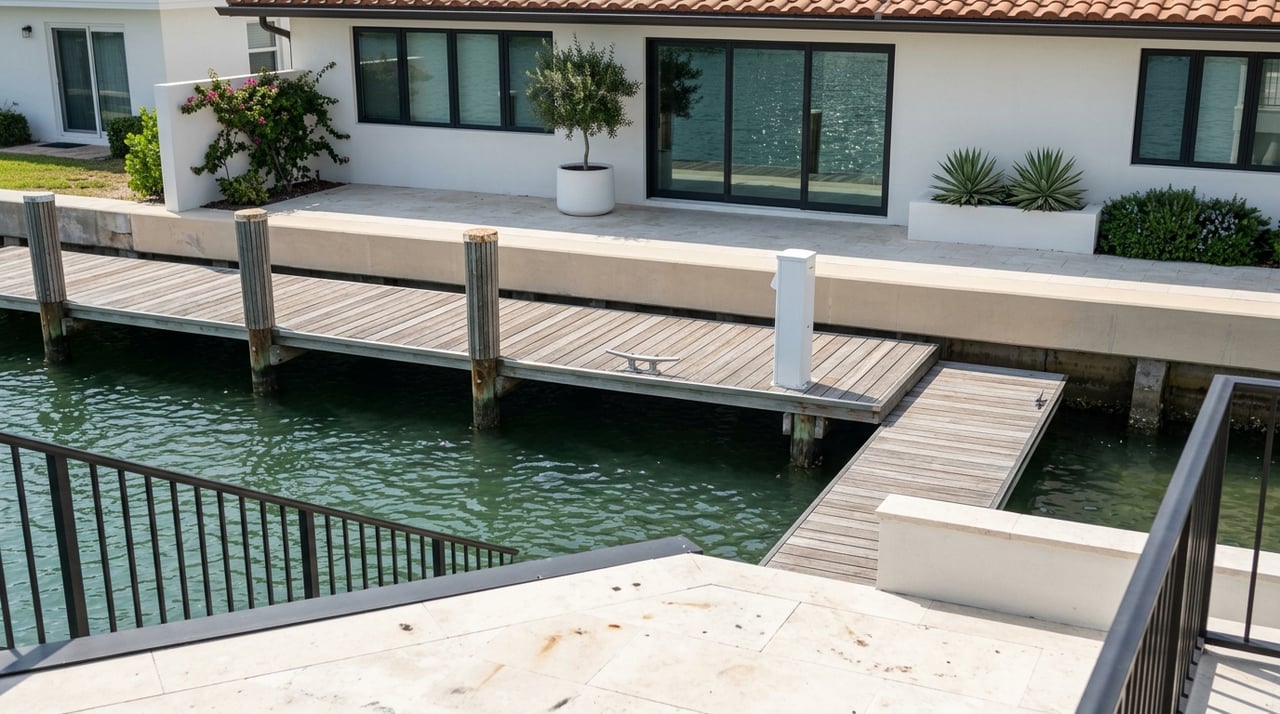
If you are deciding between Linda Isle and Harbor Island for a yacht estate, you are not choosing between a good option and a bad one. You are choosing between two very different ownership experiences in the same harbor. For buyers focused on docking, privacy, entertaining, and long-term hold quality, the right answer usually comes down to parcel geometry, permit history, and how you want the property to function day to day. Let’s dive in.
Same Harbor, Different Feel
Linda Isle and Harbor Island are both strictly residential islands in Newport Harbor, which the City of Newport Beach describes as one of the largest recreational harbors in the United States. Both sit within the same broader harbor system, but they differ meaningfully in scale and layout.
Linda Isle is the larger community, with 107 single-family lots. Harbor Island is much smaller, with 35 single-family lots. In simple terms, Linda Isle tends to feel more established and more organized, while Harbor Island feels more compact, more private, and more dependent on the specific strengths of each individual parcel.
That difference matters because yacht-estate buyers are rarely buying just a house. You are buying access, circulation, waterfront utility, and a long-term ownership setting that needs to work on land as well as on the water.
Linda Isle at a Glance
Linda Isle was created in 1933 and developed in the 1960s. City findings describe it as a gated community that is not subject to beach traffic and the parking issues more common in beach-adjacent areas.
For many buyers, that creates a practical advantage. If you plan to host often, manage household staff, or welcome guests arriving separately, Linda Isle’s original planning logic can feel more straightforward.
Linda Isle layout and parking
City records note that Linda Isle properties generally have either two or three garage spaces depending on lot width. Most lots also have a 20-foot driveway with a five-foot sidewalk area in front of the garage, and the island’s original design includes community guest parking next to the driveway.
That built-in guest parking structure is a meaningful point of separation. In a waterfront market where lot lines are tight and arrival logistics matter, Linda Isle offers a more systematized setup than many private harbor addresses.
Linda Isle building envelope
The tradeoff is that even trophy properties can have a constrained building envelope. A 2024 city permit for 51 Linda Isle shows a 10-foot bayfront setback, 4-foot side setbacks, and a 25-foot street-side setback.
If you are considering a remodel or future rebuild, those constraints should be part of your analysis early. On Linda Isle, the appeal is often the overall island fabric and entertaining flow, but the exact lot still needs careful review.
Harbor Island at a Glance
Harbor Island was developed in 1926 and is the smaller of the two island communities. City materials describe it as a private island with a gated bridge to the mainland at Harbor Island Road.
Where Linda Isle feels more standardized, Harbor Island is more irregular. City zoning findings state that the island is oval in shape, with lots that vary in size and form and with slightly different lot depths because of that geometry.
Harbor Island lot variation
This lot-by-lot variation is a key part of Harbor Island’s appeal. If you value rarity, seclusion, and the possibility of finding a highly specific waterfront setup, Harbor Island often presents a more customized proposition.
It also means broad generalizations matter less here. On Harbor Island, the exact parcel, shoreline position, and dock configuration can carry more weight than the neighborhood average.
Harbor Island access and setting
Legal access remains from Harbor Island Road, which is a private road. The shoreline is described mainly as bulkheads, which reinforces the island’s more infrastructural and tightly defined waterfront edge.
For some buyers, that supports a more tucked-away feel. For others, it means due diligence on bulkheads, dock alignment, and berth design becomes even more important.
Which Island Fits a Yacht Estate Better?
The short answer is that both can work, but they serve different priorities.
Linda Isle is often the better fit if you want a larger, more orderly bayfront setting with easier guest logistics and a more legible neighborhood structure. Harbor Island is often the better fit if you want a smaller, more private island experience and are willing to focus intensely on the strengths of one specific parcel.
Choose Linda Isle if you value
- A larger single-family island community
- More consistent lot planning
- Guest parking built into the original island design
- Easier arrival and entertaining flow
- A residential-only access pattern without a marina base at the entrance
Choose Harbor Island if you value
- A smaller and more secluded island setting
- More parcel individuality
- Strong privacy characteristics based on city findings
- The chance to optimize around a specific dock and berth arrangement
- A more intimate enclave feel
Docking and Yacht Capacity
For yacht-estate buyers, this is where the comparison gets serious. The key question is not just whether a property has a dock. It is whether the specific parcel supports the vessel length, alignment, and access pattern you need.
The city record reviewed here shows a clearer documented large-yacht example on Harbor Island. A Harbor Commission decision for 515 Harbor Island Drive approved a residential dock project with a single-hulled 60-foot LOA vessel limit, with findings that the vessel and dock remained within the prolongation of the property lines and a 5-foot structure setback.
What Harbor Island’s dock record suggests
That example tells you Harbor Island can support substantial private-berth functionality. It does not mean every Harbor Island property will support the same outcome.
Instead, it points to Harbor Island as a market where lot-specific dock potential may be especially important. If your boating needs are central to the purchase, this is the kind of island where exact frontage, water alignment, and permit history should lead the conversation.
What Linda Isle’s dock record suggests
Linda Isle is also an active dock environment. City planning records show ongoing dock and bulkhead work there, including a 2025 coastal development permit for 25 Linda Isle for a new dock and platform, a 2024 Harbor Development Permit at 62 Linda Isle for dock reconstruction, and a 2022 Harbor Development Permit at 74 and 75 Linda Isle for dock pile and decking replacement.
The takeaway is not that Linda Isle lacks dock capability. It is that, based on the city record reviewed here, its dock utility should be evaluated parcel by parcel, with close attention to permit history, bulkhead condition, and water alignment.
Turning Basin and Navigation Matter
Dock length is only part of the story. Navigation context can shape how comfortably a yacht estate performs over time.
City harbor mapping places both Linda Isle and Harbor Island near the Turning Basin. The harbor department also notes that the main channel runs directly to the Turning Basin at the Newport Boulevard bridge.
Why navigation context matters
For owners of larger vessels, nearby turning activity and channel maintenance can affect daily usability. Newport Harbor requires periodic dredging to maintain safe navigation, and the city says federal channels and offshoots are being dredged again in the 2025-26 project cycle.
That means your due diligence should include more than berth dimensions. You should also understand how the parcel relates to channel depth, turning-basin exposure, and ongoing harbor maintenance.
Privacy, Visibility, and Guest Experience
Luxury buyers often care about privacy in very practical terms. You may want discretion for family use, but you may also want a home that accommodates smooth arrivals and entertaining.
This is one of the clearest lifestyle differences between the two islands.
Linda Isle for entertaining flow
City findings from a 2017 coastal permit note that the closest public viewpoint is near Bayside Drive and Harbor Island Drive, about 1,500 feet away, and that Bayside Drive and Coast Highway are coastal view roads. Combined with the city’s note that Linda Isle is not subject to beach traffic and includes guest and overflow parking, the island tends to read as slightly easier for entertaining and visitor access.
That does not make it public. It simply suggests that Linda Isle sits in a more visible and socially legible part of the lower harbor than Harbor Island.
Harbor Island for seclusion
City resolutions for Harbor Island state that it is not adjacent to a coastal view road, public access way, or coastal viewpoint, and that the nearest coastal viewpoint is at the end of Harbor Island Drive and is not visible from the site. Taken together with its private-road access, those findings support a quieter, more tucked-away feel.
If privacy is your top priority, Harbor Island may stand out. Just keep in mind that the mainland edge of the island connects to a more active public-marina setting.
The Marina Context at Harbor Island
One nuance buyers should understand is what happens at the base of Harbor Island. The city’s Balboa Yacht Basin page places the basin at 829 Harbor Island Drive and says it offers 172 slips for vessels ranging from 31 to 75 feet.
The city’s redevelopment information also states that the site includes restaurant, office, storage, apartment, and park uses, along with existing parking. In practical terms, Harbor Island can feel more secluded at the residential level, while also having a busier marina-oriented entry environment than Linda Isle.
That contrast can be a plus or a minus depending on your lifestyle. Some buyers like the boating convenience and energy nearby. Others prefer a more purely residential arrival sequence.
Long-Term Ownership Considerations
Both islands reward careful ownership. They sit within a harbor environment that is regulated, actively maintained, and permit-driven.
That affects resale planning, maintenance timing, and renovation strategy. Improvements to docks, piles, bulkheads, and related waterfront structures are handled through the city’s harbor and dock permitting framework, and existing approvals may need review or inspection when ownership changes.
Construction and remodel realities
Both islands are also within the city’s high-density construction and noise area. That means remodels and rebuilds are subject to Saturday construction restrictions and project-sign requirements.
For long-term owners, that is important context. These are not casual waterfront holdings. They are legacy harbor properties where entitlement strategy, maintenance scheduling, and local compliance are part of protecting value.
The Best Way to Decide
If your priority is a larger, more orderly island with easier guest logistics and a strong entertaining rhythm, Linda Isle often makes the stronger case. If your priority is seclusion, rarity, and optimizing one highly specific parcel for your boating needs, Harbor Island may be the better fit.
Either way, the smartest comparison usually happens at the property level, not just the neighborhood level. The decisive factors are often lot geometry, dock entitlement, bulkhead condition, turning-basin exposure, and how much public-marina activity you want near the entry experience.
In a market this specialized, local nuance matters. If you are weighing a purchase on either island, working with advisors who understand Newport Harbor at the parcel level can save you time and help you avoid expensive assumptions.
For discreet guidance on Newport Harbor island properties, yacht-estate evaluation, and off-market opportunities, connect with Steve High & Evan Corkett.
FAQs
How do Linda Isle and Harbor Island differ in size?
- Linda Isle is the larger residential island with 107 single-family lots, while Harbor Island is smaller with 35 single-family lots.
Which island is better for yacht docking in Newport Harbor?
- Both islands can work for yacht-oriented ownership, but dock utility is parcel-specific. Harbor Island has the clearest documented example in the city record reviewed here, with an approved residential dock project tied to a 60-foot LOA vessel limit at one property.
Is Linda Isle or Harbor Island more private?
- Based on city findings reviewed here, Harbor Island generally reads as more secluded because it is not adjacent to a coastal view road, public access way, or coastal viewpoint, while Linda Isle is in a more visible lower-harbor setting.
Does Linda Isle have better guest parking than Harbor Island?
- City findings for Linda Isle note original community guest parking adjacent to driveways, along with a more standardized driveway and garage pattern, which can support easier guest logistics.
What should buyers review before buying a yacht estate on either island?
- Focus on the exact parcel’s lot geometry, dock permit history, bulkhead condition, vessel fit, turning-basin exposure, and any constraints that could affect future remodeling or waterfront improvements.