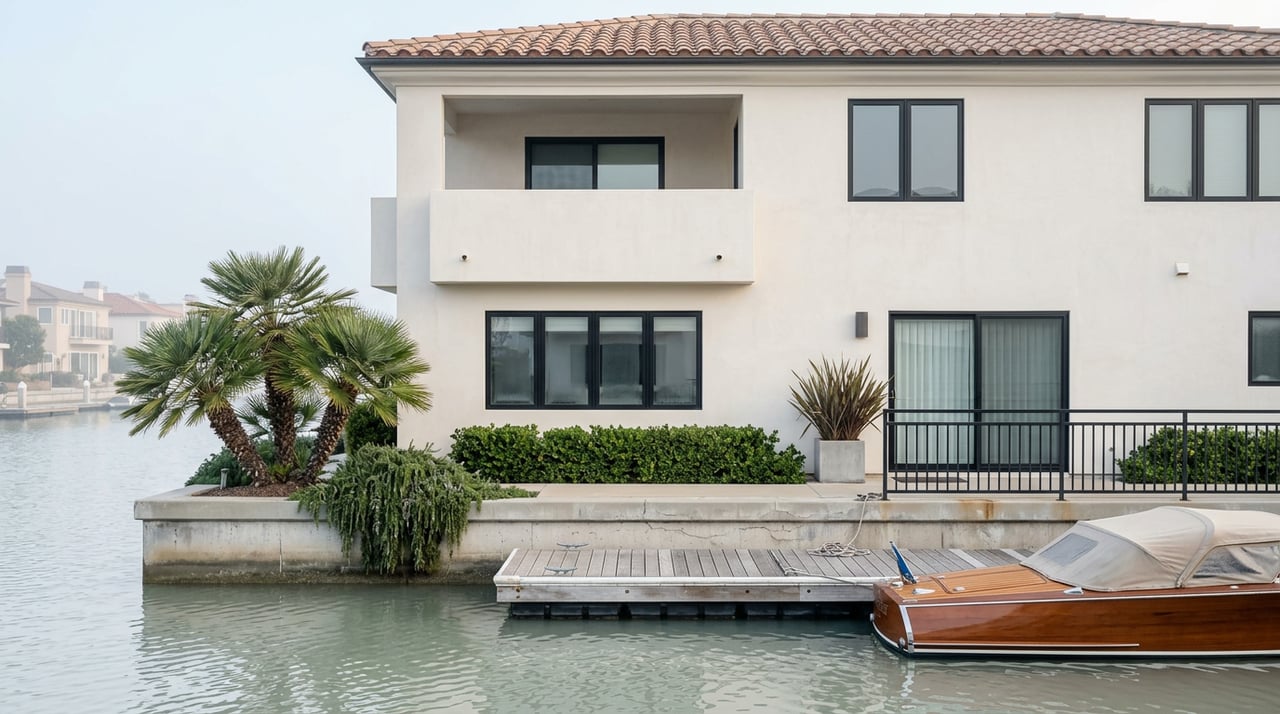
Walk the perimeter of Newport Island and you will not pass a single storefront. No coffee shop with a line out the door, no wine bar, no taco stand with a chalkboard menu. The island is a triangle of docks and bungalows wrapped by canals, reached off Balboa Boulevard at 38th Street, with a small park of its own and half its homes backing directly onto water. There is nowhere on the island to buy a sandwich.
That absence is not a gap. It is the arrangement. Newport Island was built as a place to live on the water, not a place to shop for anything, and every meal, coffee, or errand its residents run happens somewhere else, most often a two-minute walk across the Newport Boulevard bridge into Cannery Village. The island supplies the quiet. The bridge supplies everything else. And right now, what's on the other side of that bridge is changing faster than almost anywhere else in Newport Beach.
A Triangle With No Main Street
The canals that wrap Newport Island give the neighborhood its shape and, oddly, its most famous export. A perpendicular side channel cuts through the loop that longtime boaters call the Rialto, a name that shows up on some maps and nowhere in casual conversation among people who actually live there. Since the early 1980s, this stretch of water, running from the Via Lido Bridge west, under the Newport Boulevard bridge, and into the canals that encircle the island, has been the center of Newport Harbor's motorized gondola trade. Charter companies based nearby still run rowing and motorized gondolas through the loop today, and gondoliers passing under the Lido Bridge are known to serenade their passengers on the way through.
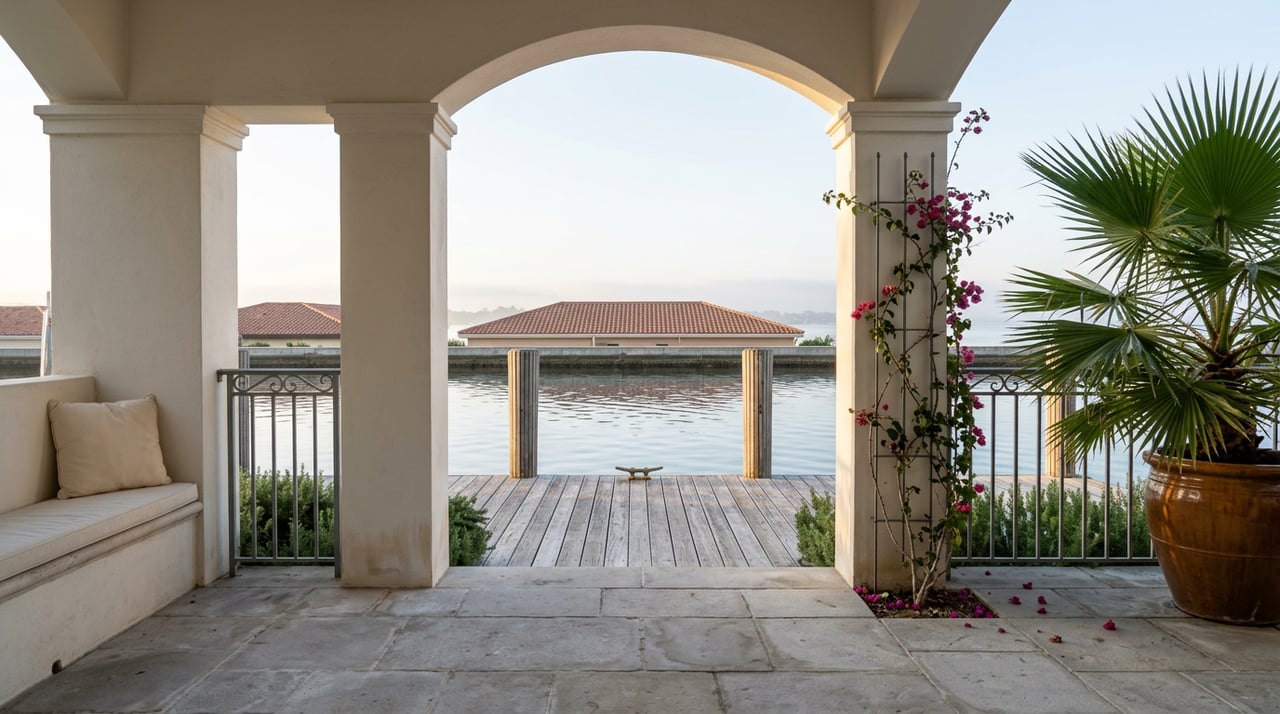
Half the homes on the island are bayfront, which means paddleboards and kayaks racked dockside are as common a sight as porch furniture elsewhere. The island keeps its own small park, and 38th Street Park sits just off it, close enough to function as an extension of the neighborhood rather than a separate destination. None of this requires a commercial strip. The water is the amenity.
The Bridge Does the Rest of the Work
Compare that to Newport Beach's other harbor islands. Balboa Island built its identity around Marine Avenue, a street of small shops and restaurants that locals treat as a genuine downtown. Lido Isle has its own bridge leading straight into Lido Village, the commercial heart of that side of the harbor. Newport Island has neither, so its sense of place is imported, one bridge crossing at a time, from Cannery Village.
Cannery Village earned its name honestly. It grew up around the fishing trade, and the neighborhood still carries that easygoing, small-business feel, the kind of place where the businesses stay small enough that neighbors actually know each other. Longtime standbys anchor it: Mama D's Italian Kitchen for a casual dinner, Newport Beach Brewing Company for a pint, The Dock for boaters who want food delivered dockside without leaving the water, and the Windward Sailing Club for anyone who wants to be out on it. The Regency Lido Theater sits less than a mile off, still showing both studio releases and independent films.
What makes this particular stretch of Newport Beach worth watching right now is how much of it is turning over in 2026. A pop-up in Cannery Village has started baking New York style bagels fresh daily. Just across the water at Lido Marina Village, goop opened a new lifestyle shop this year carrying its beauty, jewelry, and home lines, and La La Land Kind Cafe is preparing to open a location there as well. At Lido House, chefs quietly opened Kaiya Omakase in July 2026, a twelve-seat sushi counter built around seasonal seafood, tucked inside a hotel a short walk from the Newport Boulevard bridge. None of these openings changed anything about Newport Island itself. The docks are the same docks. The canal loop is the same walk it was five years ago. But the two-minute crossing that defines what living there actually feels like from week to week keeps resetting itself, which is a strange kind of stability: the neighborhood stays still while its front door keeps changing what's behind it.
38th Street Park's Two Courts, One Half-Size
If Cannery Village supplies Newport Island's food, 38th Street Park supplies its outdoor life. The park's amenities are modest and specific: two basketball courts, one full-size and one half-court, along with picnic tables, play equipment, restrooms, and water fountains. Basketball there only runs during daylight hours, since the park has no electricity for lights, and the rules are unambiguous about no alcohol and no amplified sound. It is not a park built for events. It is built for the after-school pickup game and the Saturday morning shootaround, and it has apparently worked that way for a long time. People who grew up nowhere near the island still remember playing basketball there decades later, the kind of low-key local landmark that never shows up in a listing but shapes how a place actually feels to live in.
December Turns the Same Water Into a Different Show
For most of the year, the canal loop around Newport Island is a quiet errand route. For five nights in December, it becomes something closer to a stage. The Newport Beach Christmas Boat Parade, entering its 118th year in 2026, runs December 16 through 20, with boats setting out around 6:30 each evening. More than 100 decorated yachts, boats, kayaks, and canoes typically make the run through the main channel, past Balboa Island, whose own bayfront homes compete separately in a Ring of Lights home-decorating contest along the parade route.
Newport Island sits off that main channel, so its residents watch a quieter version of the same season. Owners with docks on the canal loop hang lights on their own boats and bulkheads without needing to enter a contest or fight for a curb spot at the Balboa Fun Zone or along the Peninsula's public viewing areas. It is one of the few times a year the neighborhood's usual quiet gets a soundtrack, and it comes from the same neighbors who otherwise keep their docks bare the rest of the year.
The Loop, If You Want to Walk It
For anyone trying to picture how these pieces actually fit together on a given Saturday, the route looks something like this:
- Start at the island's own small park and walk the canal perimeter, past the docked kayaks and paddleboards that mark the bayfront homes
- Cross the Newport Boulevard bridge on foot into Cannery Village
- Grab a bagel from the pop-up or settle in at Mama D's or Newport Beach Brewing Company
- Continue toward Lido Marina Village for a look at what's new, whether that's the goop shop or a reservation at Kaiya Omakase
- Loop back over the bridge as the evening gondola tours start passing underneath
- Detour to 38th Street Park if there's still daylight left for a pickup game
None of this requires owning a boat or a calendar full of plans. It is simply what the neighborhood offers when you take it at face value: a quiet residential loop with almost nothing for sale inside it, connected by a short bridge to one of the most active small commercial corridors in the city.
That contrast, quiet water on one side, constant reinvention on the other, is what makes Newport Island worth understanding on its own terms rather than as a smaller version of Balboa Island or Lido Isle. It was never built to compete with them. It was built to borrow from what's next door, and right now, what's next door is worth the walk.
For anyone weighing what a home on this stretch of canal is actually worth, or curious how Newport Island's waterfront compares to the harbor's other residential islands, Steve High & Evan Corkett work this part of the coast closely enough to know the difference between a listing description and the way a neighborhood actually runs. Work With Us — Start a Confidential Consultation.
This article is general information, not legal, tax or financial advice. Consult a qualified professional about your situation.