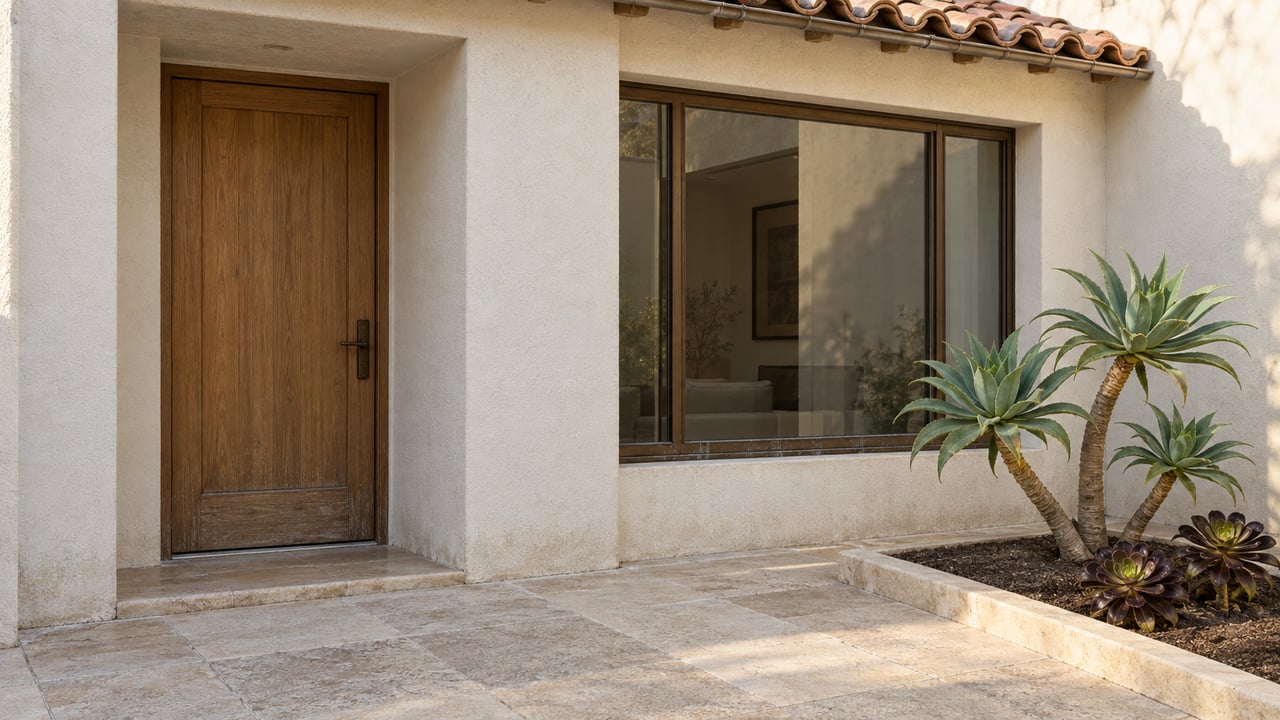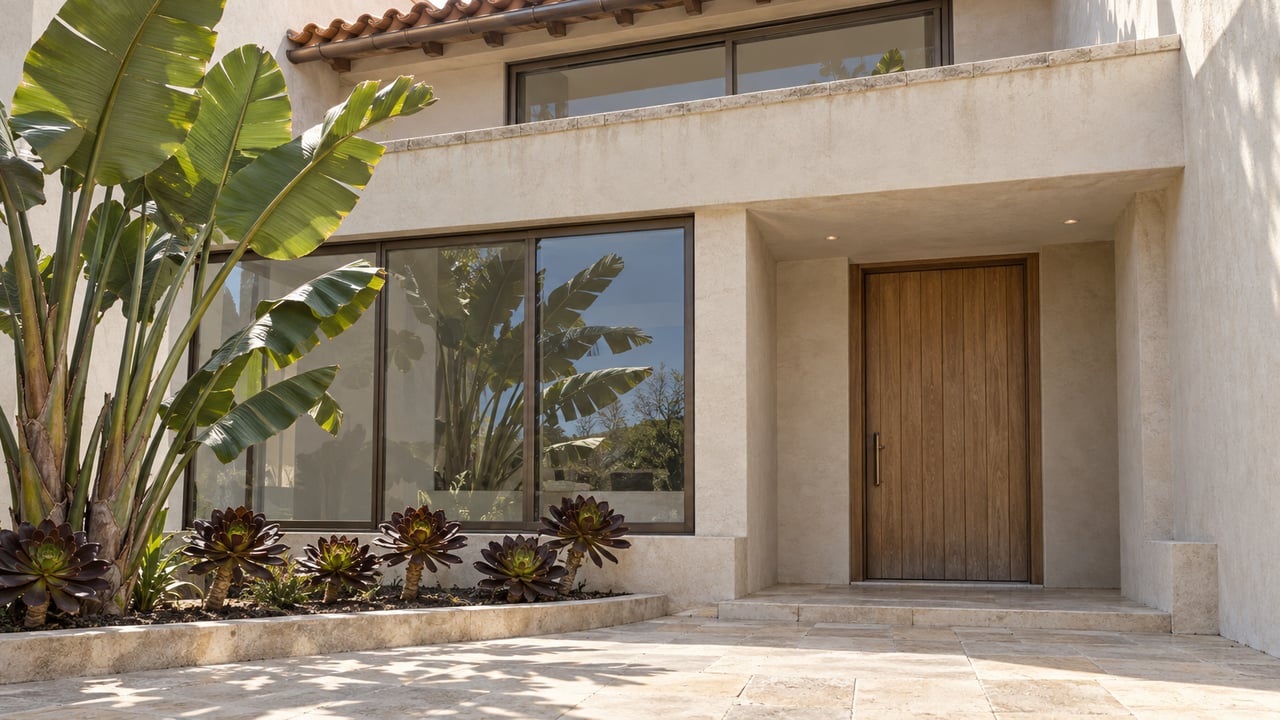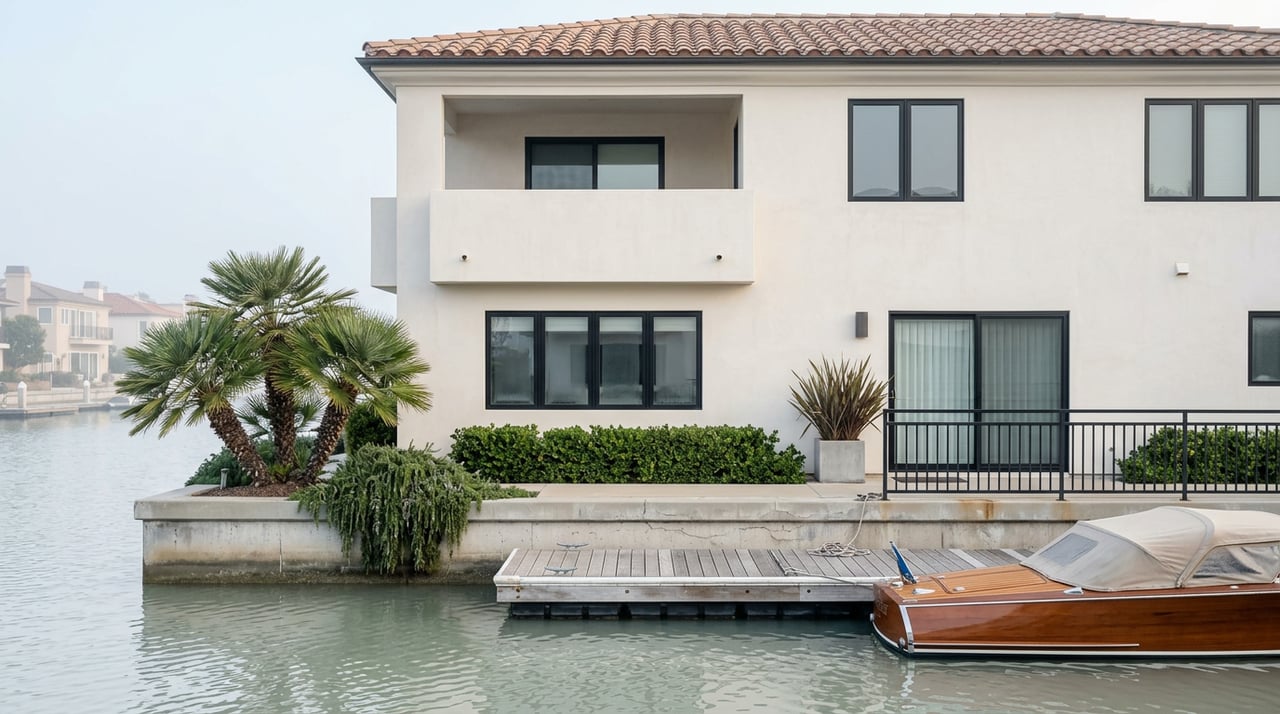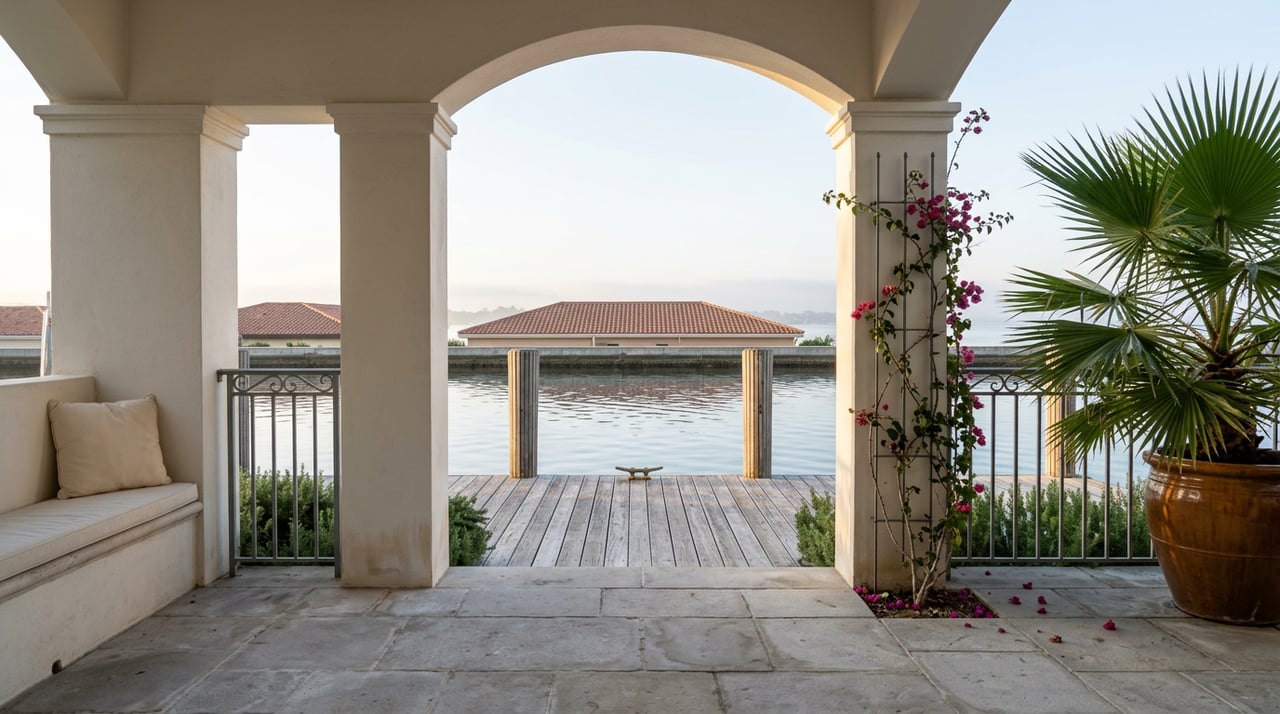
Ask that question online and you will see different counts and descriptions. A national listing aggregator says eight. A neighborhood blog written in 2009 says seven. A local brokerage's own community page says seven as well. And at least one real estate marketing site insists Collins Island has thirty-six residences, complete with an eighteen-hole golf course designed by Robert Trent Jones Jr. and hiking trails.
None of that last claim is true. Collins Island is a private spit at the western tip of Balboa Island, reached by a secured bridge off Park Avenue. There is no golf course. There is no hiking trail. What there is, by the most consistent and current counts, is eight waterfront homes on roughly two acres, ringed by Newport Harbor's main channel and turning basin.
The discrepancy is not a rounding error. It is the most useful fact in this whole neighborhood, because it tells you exactly how this market behaves and why shopping it like a normal Newport Beach listing will leave you guessing.
What Eight Actually Looks Like
Start with what is documented. 1 Collins Is a Traditional-style home built in 1961, sitting on 140 feet of waterfrontage with 270-degree views of the main channel, the turning basin, and the Balboa Pavilion. It last changed hands in August 2020 for $8,575,000. 3 Collins sold in June 2010 for $8,700,000, a 4,385-square-foot home with a roof deck built for 360-degree views and a dock rated for a 70-foot yacht. 5 Collins is a French Provincial home of about 3,650 square feet with a dock that handles three vessels, one up to 50 feet, and one of only two swimming pools on the entire island. 7 Collins is a Cape Cod on a 6,000-square-foot lot with 150 linear feet of water frontage and dock space for two boats, one up to 70 feet.
That is four of the island's eight parcels, each with a specific footprint, a specific dock capacity, and in most cases a sale date that is now years, not months, old. No two of these homes look alike. No two transactions happened close together. And as of this writing, none of the eight is listed for sale anywhere.
Why the Count Keeps Drifting
Here is the mechanism behind the confusion. Collins Island does not turn over the way a normal subdivision does. A home selling once a decade is closer to the pattern than a home selling every few years. When a sale that rare goes through, it often happens quietly, through a private introduction or a broker's own network, rather than a public MLS listing that every portal can scrape and refresh.
That creates a strange asymmetry. A listing aggregator's database lists "eight waterfront homes," while a neighborhood blog lists seven. One real estate marketing page, meanwhile, lists amenities Collins Island does not have, including a golf course and hiking trails.
These pages show different counts and descriptions, and some of the information dates back a decade or more.
The Cagney Ledger
Long, quiet ownership is not new to Collins Island. James Cagney bought the island in 1938, according to a contemporaneous newspaper account, reportedly for $32,000, with some tellings suggesting he won it in a poker game. The U.S. Coast Guard used the island during World War II, and Cagney sold it in 1948.
That is the whole documented arc of one owner's decade on the island: a purchase, a wartime use most residential parcels never see, and a sale a decade later. Scale that pattern across eight homes and multiply it by nearly a century, and you get a neighborhood where the total number of recorded transactions could probably be counted on two hands. A market that changes hands this rarely was never going to produce a clean, constantly-updated public record. It produces exactly what we found: a handful of well-documented sales separated by long silences, and a lot of secondhand pages filling the gaps with guesswork.
What This Means If You're Shopping the Harbor's Private Islands
If you are comparing Collins Island against Newport Harbor's other gated waterfront enclaves, the practical lesson is not about square footage or dock length. It is about where the real inventory lives.
On an island this small, the current, accurate picture is not sitting on a portal waiting to be filtered by price and bedroom count. It is held by whoever is tracking ownership changes, estate transitions, and the quiet conversations that precede a private sale, long before anything reaches a public listing, if it ever does. That is the same dynamic that shapes pricing conversations on nearby Harbor Island and Linda Isle, where scarcity and discretion do more to set expectations than any comparable sale ever could.
For a buyer, that means the useful question is not "what's listed on Collins Island right now" (the answer, most of the time, is nothing) but "who would actually hear about it first if something moved." For a seller weighing a private sale against a public one, it means understanding that the same opacity working against buyers researching the island online is the exact quality that protects a seller's privacy and can concentrate serious interest instead of open curiosity.
If you are trying to evaluate what a Collins Island home is actually worth today, the documented sales from 2010 and 2020 are useful anchors, but they are old enough that they describe a different market cycle. The more reliable read comes from tracking activity across all of the harbor's comparable private islands together, since so few individual data points exist on Collins Island alone to triangulate from.
Frequently Asked Questions
Are any homes for sale on Collins Island right now? As of this writing, no. The island's eight parcels rarely list publicly, and long stretches with zero active listings are the norm rather than the exception.
Is Collins Island the same as Balboa Island? No, though they are connected. Collins Island is a separate, smaller private landmass at the western tip of Balboa Island, reached across a secured bridge rather than by the public streets that run through Balboa Island's main and little islands.
Why do different websites list a different number of homes on Collins Island? Because the island transacts so rarely that most public sources are working from whatever count they last verified, sometimes a decade or more ago, rather than a current survey. The most consistent and current figure across major listing platforms is eight.
If you are weighing Collins Island against another one of Newport Harbor's private waterfront addresses, the conversation worth having is not about a listing count online. It is about who is actually watching this market closely enough to know when something moves.
High | Corkett works these harbor islands directly, including recent Collins Island transaction history, and can walk you through what a private sale process here actually looks like. Work With Us — Start a Confidential Consultation.